
When Do Louisiana Trees Actually Drop Their Leaves?
Not all at once. Southern pines shed their older needles in late September and October, deciduous hardwoods such as sweet gum drop in late November and early December, bald cypress sheds in winter and live oaks drop in spring. For most roofs, the best fall gutter cleaning comes after the hardwoods finish and before January’s heavier rain.
TLDR:
- Louisiana’s leaf drop comes in waves, not one weekend
- Pines shed older needles first, in late September and October
- Sweet gum, crape myrtle and other hardwoods drop in late November and early December
- Bald cypress sheds in winter, and live oaks drop in spring
- January averages more days with an inch of rain than any other month in Baton Rouge
- Clean after the hardwood drop and before January, then plan a spring visit under live oaks
Up north, fall is one big event. The leaves turn, they fall over a few weeks, and the gutters get cleaned once. South Louisiana does not work that way, and that is why so many gutters here get cleaned at the wrong time.
Clean in early October and most of the hardwoods over the roof have not dropped yet. The gutter fills right back up.
Denham Springs has plenty of wooded neighborhoods, and a lot with pine and hardwood over the same roofline keeps dropping debris from September into spring. The fix is not cleaning more often. It is cleaning at the right point in the cycle.
Not sure when your roof is ready for a fall cleaning? We look at the trees over your gutters and tell you the timing that fits your house.
The rest of this guide walks through the waves in order, starting with the one that begins before most people think about leaves at all.
Pines Go First: Needle Drop in Late September and October
Pines are evergreen, so it is easy to assume they never shed. They do, and on a schedule.
Mississippi State University Extension’s October 2017 forestry newsletter explains that each needle on a southern yellow pine lives roughly a year and a half. In fall, the tree pulls nutrients back from its older needles and drops them, which shows up in late September and October as the inner part of each tuft turns brown.
That is the first load your gutters take each fall. Needles are thin, they slip into small gaps and they mat together once they get wet.
Under heavy pine, this first wave alone can justify a check in early fall. Our guide to gutter guards that hold up under pine needles covers why needles are harder on a gutter than leaves. Once the needles are down, the hardwoods are next.
Hardwoods Follow: Late November Into Early December
The broadleaf trees that turn color are the ones most people picture when they think of fall leaves. Here, they turn late.
In a 2015 news release on Louisiana fall color, an LSU AgCenter horticulturist wrote that late November and early December are when the leaves of some deciduous trees turn as they get ready to drop. The trees listed as coloring well in Louisiana include sweet gum, crape myrtle, black gum, Chinese pistachio, ginkgo, dogwood and some oaks.
The same release notes that the farther south you live in Louisiana, the less fall color you see. The leaves still come down. They just do it later than the calendar suggests.
Sweet gum deserves a special mention. A November 2019 LSU AgCenter article on planting for fall color praises its leaves and warns about its spiky seed balls, and it lists red maple among the native trees that color well here. A sweet gum over a roofline sends down both leaves and those balls.
This hardwood wave is the big one for volume. It is also the reason an October cleaning so often has to be repeated.
Bald Cypress Waits for Winter, and Live Oaks Wait for Spring
Two of the most common trees in south Louisiana do not follow the fall pattern at all, and they explain why a single fall visit never covers everything.
Bald cypress. The same 2019 LSU AgCenter article describes the state tree as a deciduous conifer: it has needles, turns rust-colored in fall and sheds those needles every winter. Fine cypress needles behave a lot like pine needles once they reach a gutter.
Live oak. The USDA Forest Service species profile, written in 1992, describes southern live oak as nearly evergreen. The big oaks drop in spring instead of fall.
LSU AgCenter’s horticulture specialist, answering a reader in a 2015 Southern Garden column, wrote that it is normal for a live oak to drop all of its leaves in spring, and that the amount varies from tree to tree and year to year.
If your roof sits under a mature live oak, the fall cleaning is not the main event. The spring drop is.
So where does that leave the calendar? It depends on which of these trees hang over your house, and on what the rain does next.
Why the Timing Matters: The Rain Comes Right After the Drop
A gutter full of dry leaves on a dry day is not the problem. A gutter full of leaves when the first heavy rain hits is.
NOAA’s 1991 to 2020 monthly climate normals for the airport station in Baton Rouge show November is the driest month of the fall at 3.90 inches. December climbs to 5.32 inches, and January averages 6.36.
January also averages 2.2 days with an inch or more of rain, the most of any month in the year.
Put the two calendars together. The hardwood leaves land in a fairly dry stretch, sit in the gutter and then get soaked as the rain picks up. Wet leaves tend to settle at outlets and elbows, and that is where a gutter backs up.
Want your gutters clear before the January rain? Book a fall cleaning after the leaves are down, and we will flush the system and check the downspouts while we are up there.
That pattern points to a fairly clear window for most homes.
When to Schedule Your Fall Gutter Cleaning
The best time for a fall cleaning is after the hardwoods finish dropping and before January. For many roofs in the Baton Rouge area, that lands in December, but your own trees are the real guide.
A simple way to read it: once the sweet gum, crape myrtle and other hardwoods over your roof are mostly bare, the fall load is in the gutter and it is time.
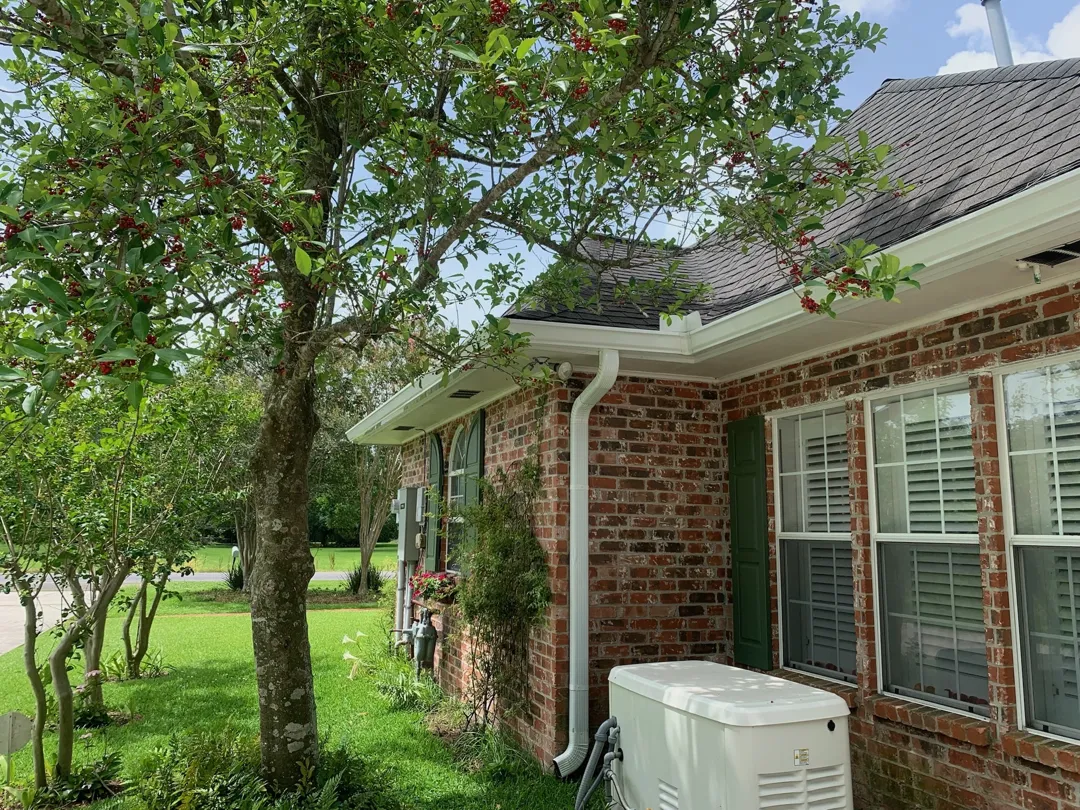
Here is how that shifts with the trees over your house:
| Mostly over your roof | What drops, and when | Suggested timing |
|---|---|---|
| Pines | Older needles, late September and October | A check after the needle drop, plus the winter cleaning |
| Sweet gum, crape myrtle and other hardwoods | Leaves, late November and early December | One cleaning after the drop, before January |
| Bald cypress | Needles, through the winter | A cleaning late in the winter |
| Live oak | Old leaves, in spring | A spring cleaning after the drop |
| A mix of all of them | Something nearly every season | More than one visit a year, set by the trees |
Treat the table as a starting point. A tree right at the eave matters more than a big tree across the yard.
If your home in Walker or Livingston sits on a wooded lot with pine and hardwood together, that is the case for two visits rather than one. With timing settled, the next question is how much a guard or filter changes the picture.
Gutter Guards and Filters During Leaf Season
A good cover cuts down how often the gutter needs attention, but it does not remove the need. Leaves and needles still collect on top, and the finest debris can still reach the trough.
A leaf screen handles the hardwood wave well, since leaves are big. Pine and cypress needles are the harder test, because they are thin enough to slip through wider openings. Our comparison of gutter filters and gutter guards explains which cover fits which debris.
If your gutters already have a cover, the fall visit becomes a surface check and a rinse, plus a look at the trough for anything that got through. That leads to what the visit itself should cover.
What a Fall Gutter Cleaning Should Include
Scooping out leaves is only part of it. A cleaning that leaves the downspouts packed has not done its job.
Our professional gutter cleaning covers four steps on every visit:
- System inspection: checking the gutters and downspouts for sagging, leaks and clogs
- Full debris removal: clearing leaves, dirt and buildup, including tight corners and elbows
- High-flow flush: running water through to confirm proper flow and catch hidden issues
- Final walkthrough: leaving the gutters clean and ready for the next downpour
The flush matters most in leaf season. A downspout can look clear from the ground and still hold a plug of wet leaves at the elbow.
If the gutter still overflows in a hard rain once it is clean, the problem is likely sizing, not debris, and our guide to why clean gutters still overflow shows how to check. Water that spills over the edge for months can also start rotting the boards behind the gutter, which our guide to fascia rot from gutter overflow covers.
Common Questions About Fall Leaves and Louisiana Gutters
These are the questions homeowners ask us about timing a fall gutter cleaning around the trees here. The short version: let your trees, not the calendar, set the date.
When should I clean my gutters in the fall in Louisiana?
For most roofs, after the hardwoods have dropped and before January. LSU AgCenter puts the deciduous leaf drop in late November and early December, and January averages the most heavy-rain days of the year in Baton Rouge. Under heavy pine, add an earlier check after the October needle drop.
Do live oaks drop their leaves in the fall?
Not mainly. Live oaks are nearly evergreen, and LSU AgCenter says it is normal for a live oak to drop all of its leaves in spring, with the amount varying by tree and year. If a live oak hangs over your roof, plan a cleaning in spring as well as the fall visit.
Why are my gutters full of pine needles in October?
Southern pines drop their older needles every fall. Mississippi State University Extension notes the shed shows up in late September and October, when the inner part of each needle tuft turns brown. That is normal for a healthy tree, and it means homes under pine often need a check earlier than other houses.
Is one fall gutter cleaning enough in Louisiana?
For a roof under a single type of hardwood, one visit can be enough. If your lot mixes pine, hardwood and live oak, though, those trees drop at different times. A home with pine and live oak overhead usually needs more than one visit a year to keep the gutters clear between storms.
Do gutter guards mean I can skip fall cleaning?
No. Guards and filters reduce how often you clean, but leaves and needles still collect on the surface, and fine debris can reach the trough. With a cover in place, the fall visit tends to be a quicker surface check and rinse, plus a look inside for anything that slipped through.
What happens if I leave fall leaves in the gutters over winter?
The leaves get soaked once the winter rain picks up, and wet debris settles at the outlets and elbows. A blocked outlet sends water over the edge instead of down the downspout, where it can soak the fascia and pool near the foundation. December and January bring more rain than November.
Clean After the Drop, Not Before
Louisiana’s leaf season is a series of waves, from pine needles in October to hardwood leaves in December to live oak leaves in spring. Cleaning once in early fall catches the first wave and misses the biggest one.
As a firefighter-owned company with over 12 years of experience, we tell you what your roof needs instead of putting you on a standard schedule, and we flush the system before we leave. You can see finished work in our project gallery and learn more about who we are.
Ready to get ahead of the January rain? We aim to schedule most appointments within 1 to 3 business days. You get a clear quote, a cleaning timed to your trees and no pressure.