
Why Fascia Rots From Gutters, and How to Tell a Trim Repair From a Structural One
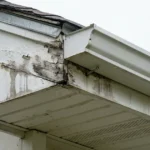
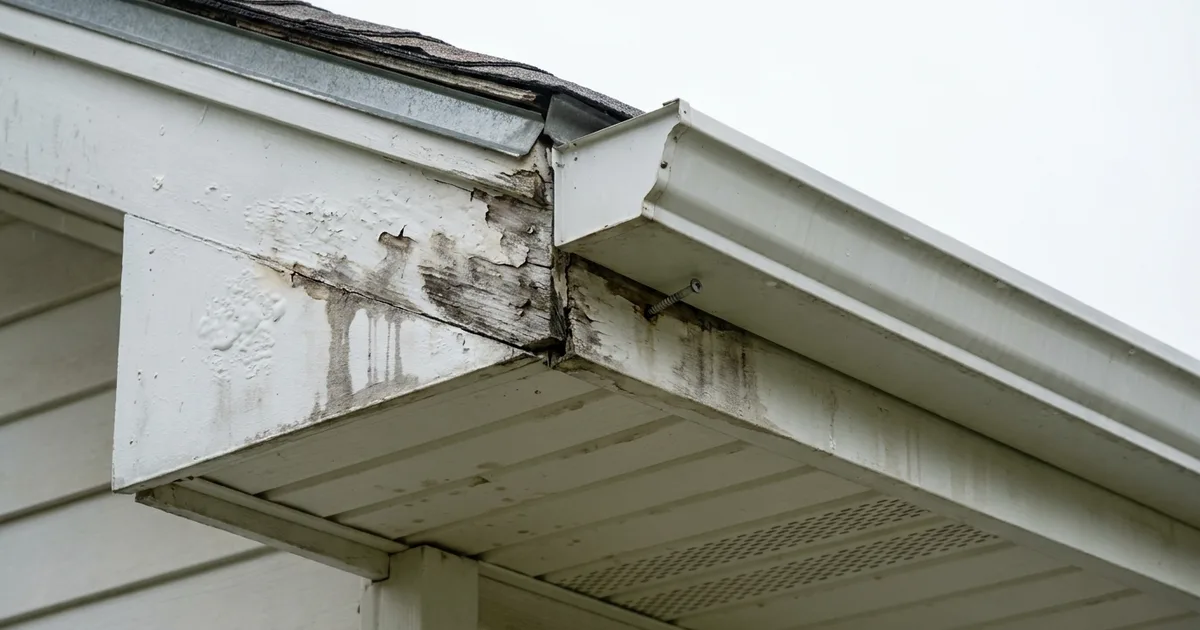
Fascia rot from gutters is a water problem that shows up at the fascia. Water gets behind the gutter, soaks the board, and the wood softens until the fasteners stop holding. Replace the board without fixing the water path and it rots again. Once the rot reaches the rafter tails or roof sheathing, it is a structural repair, not gutter work.
TLDR:
- The fascia board is the symptom. The water path behind the gutter is the cause
- A replaced board on the same water path rots the same way, often in the same spot
- Damage escalates in four stages: water behind the gutter, soft fascia, soffit damage, then structure
- The first two stages are trim work. The last two involve the roof edge itself
- If the same spot has failed twice, the cause is upstream of what was replaced
- You can spot most early warning signs from the ground, without a ladder.
Louisiana is hard on roof-edge wood. Baton Rouge averages about 62 inches of rain a year, according to Current Results’ summary of NOAA’s 1991 to 2020 climate normals. Add summer humidity and pine debris in Livingston Parish gutters, and a board that stays damp has little chance to dry out between storms.
Humidity alone is not what rots the board, though. The US Forest Products Laboratory’s 2021 Wood Handbook chapter on biodeterioration notes that water vapor in humid air will not wet wood enough to support significant decay. It takes liquid water, from rain or condensation. At the roof edge, the gutter is often what delivers it.
Soft fascia, peeling paint, or a gutter that will not stay put? We will find where the water is coming from before we quote a single board.
Why Fascia Rots Again After It Is Replaced
“Why does my fascia keep rotting after it was replaced?” is one of the most useful questions a homeowner can ask. It is common enough that we answer it on our page for exterior structural repairs in Livingston, and the short answer is that the water is still getting there.
A fascia board rots because water keeps reaching it. Swap in a new board but leave the gutter pitched, mounted, and overflowing the same way, and the new wood starts the same process from day one.
The Wood Handbook puts the principle plainly. In making repairs caused by decay, every effort should be made to correct the moisture condition that led to the damage. The same chapter adds the hopeful half: wood kept air dry will not decay, and decay already present will not progress.
That gives you the most useful diagnostic here. If the same spot fails twice, the cause is upstream of what was replaced. A repeat repair is a symptom, not bad luck.
This table maps common repeat failures to the place worth looking next:
| What failed twice | Where to look upstream |
|---|---|
| Fascia rotted again at the same corner | Gutter pitch, a clogged outlet above it, or missing drip edge |
| Gutter sags in the same spot after rehanging | Fasteners set into already softened wood, and the water feeding it |
| Downspout separates at the same joint | Extra overflow load, an undersized outlet, or a joint taking impact |
| Paint peels on the same stretch every year | Water running behind the gutter, not a paint problem |
In every row, the part that failed sits downstream of the part that needs fixing.
How Water Gets Behind a Gutter in the First Place
A gutter should catch water in front of the fascia. Rot starts when water ends up behind that line instead. There are four common paths:
- Pitch. A gutter that holds water at a low spot keeps it sitting against the back of the trough and the fasteners.
- Drip edge. Louisiana’s 2021 residential code, as published on UpCodes, requires a drip edge at the eaves and rake edges of shingle roofs. Without one, or with a gutter hung so water slips behind it, roof runoff runs down the face of the fascia.
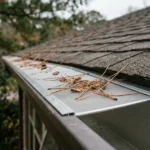
- Overflow. A clogged outlet or a trough full of debris can push water over the back edge instead of the front. Our page on downspout maintenance for Livingston homes explains why a gutter can overflow even when the downspout looks fine.
- Fasteners. Every hanger is a hole into the fascia. Loose or widely spaced fasteners let the gutter shift and open the back edge.
The Wood Handbook singles out this exact zone. It calls design, work quality, and maintenance of roofing systems critical, particularly at roof edges, and recommends gutters and downspouts kept free of debris.
Once water has a path, the damage moves in a predictable order.
The Four Stages, and Where the Cost Changes
Fascia damage moves through four stages, and each one pulls in more of the roof edge.
The line that matters sits between stage two and stage three. Up to that point, you are replacing trim and resetting a gutter. Past it, the damage is inside the roof edge.
Every roof edge is different, so think in terms of scope rather than price. A fascia board is a trim repair. Rafter tails are a structural one, with different materials and a different conversation.
Not sure which stage you are looking at? We will tell you straight, and we will fix the water path in the same visit, so the new wood stays dry.
Stage three deserves a closer look.
What Soffit Damage Actually Means
The soffit is the underside of the roof overhang. On many homes it also carries the attic intake vents.
When fascia rot reaches it, you see staining near a corner, a dropped or bowed panel, or paint failing where the soffit meets the fascia. By then, water has been getting past the board for a while.
This is also where it stops being cosmetic. Wet, decaying wood at the roof edge invites insects. The Wood Handbook notes that subterranean termites are more common in southern states and must have a constant source of moisture. It also says roof leaks should be repaired because the decay that results makes the wood more attractive to carpenter ants.
A stained soffit does not mean termites. It means the moisture has been there long enough to spread, and the next stage changes the job entirely.
When It Becomes a Structural Repair
Behind the fascia sit the rafter tails, the ends of the roof framing, often with a sub-fascia board and the roof sheathing on top.
When rot reaches those parts, the repair means opening the edge, replacing damaged framing or sheathing, and rebuilding the trim. From the ground, the warning signs look like this:
- A visible dip or wave along the eave line
- A gutter that will not hold a fastener anywhere along a run
- Soffit that has dropped away from the fascia
- Stains that show up on the wall below the eave
Our exterior structural repair work covers fascia and soffit rot behind failing gutters, framing damage, and the trim and sheathing around the repaired area. Because we also install and repair gutters, we can correct the water path in the same job instead of handing it to another trade.
If the damage has not reached the framing yet, you may only need the lower-tier fix. Our gutter repair service in Livingston handles sagging runs, loose hangers, and improper pitch, and it answers why gutters keep sagging in the same spot after a repair. Either way, the next step is a look from the ground.
What to Check Before You Call Anyone
You can learn a lot without leaving the yard. Stay off the ladder and use these checks:
- Fascia paint. Peeling in one stretch, with sound paint elsewhere, points to a local water source.
- Dark streaks below the gutter. They show water running behind it.
- Gaps. Daylight between gutter and fascia means loose fasteners or soft wood.
- The soffit near each corner. Stains, sagging panels, or open seams mean the damage has moved past the board.
- A hard rain, watched from a dry spot. Note where water spills over the gutter.
- Your repair history. If this spot was repaired before, say so when you call. It is the best clue there is.
Take a few photos. They speed up the first conversation and show if the damage is spreading.
Common Questions About Fascia and Soffit Damage in Louisiana
These are the questions homeowners ask once they have spotted soft wood or peeling paint at the roof edge. The theme running through all of them is the same: find the water first.
Why does my fascia keep rotting after it was replaced?
Because the water is still reaching it. A new board installed on the same water path, with the same gutter pitch, the same overflow, or the same missing drip edge, gets wet the same way the old one did. Fix where the water comes from, and the replacement board has a chance to stay dry.
Can rotted fascia hold gutters?
Not reliably. Gutter fasteners need solid wood to bite into, and softened fascia lets them loosen and back out. That is why a gutter often sags right where the rot is most advanced. Rehanging a gutter on rotted fascia is a short-lived repair, so the damaged wood should be replaced first.
Is soffit damage serious?
It is a sign the problem has moved past the fascia board and into the roof edge. On its own, a stained soffit panel may be a modest repair. But it tells you water has been getting in for a while, and the next parts in line are the rafter tails and sheathing, which are structural.
When does a gutter repair turn into a structural repair?
When the damage reaches the framing behind the trim. If rot is limited to the fascia board, it is a trim and gutter repair. Once the rafter tails, sub-fascia, or roof sheathing are soft or damaged, the edge has to be opened and rebuilt, which is structural work.
Should the gutter and the fascia be repaired at the same time?
Usually, yes. The fascia is what holds the gutter, and the gutter is often what damaged the fascia. Replacing one without correcting the other tends to repeat the problem. Handling both in one job means the new wood goes up with the water path already fixed.
Fix the Water, Then the Wood
With fascia rot, the order of the work decides if the repair lasts. Fix the wood first, and the water ruins it again. Fix the water first, and the new wood has a real chance.
As a firefighter-owned company with over 12 years of experience, we handle gutters and exterior structure, so the diagnosis and repair stay in one set of hands. We serve Baton Rouge, Denham Springs, Walker, and Livingston Parish.
Tell us what your roof edge looks like, and we will tell you which stage it is in. No pressure, a clear scope, and the water path fixed along with the wood.
Prefer to talk it through first? Call (225) 304-2210 and ask about fascia and soffit repair.