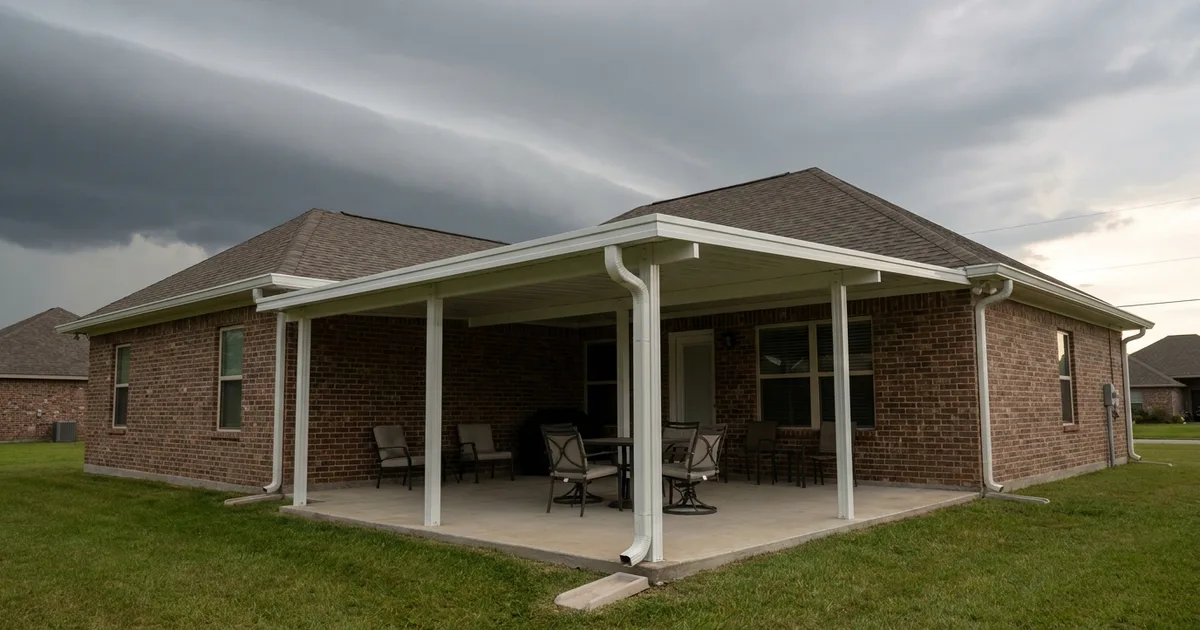

A Pre-Storm Gutter and Patio Cover Checklist You Can Run From the Ground
Before a storm, spend 20 minutes at ground level. Walk the perimeter and check where each downspout empties, look up for gutters pulling away from the fascia, inspect the patio cover posts and the attachment to the house, then secure anything that could fly. Take photos before the weather arrives. Anything you can only see from a ladder belongs to an inspection.
TLDR:
- Minutes 0 to 5: walk the perimeter and look at where the water will land, not just where it starts
- Minutes 5 to 10: look up at the gutter line for gaps at the fascia, sag, debris, and drip stains
- Minutes 10 to 15: check the patio cover posts, footings, attachment to the house and anything sitting on the panels
- Minutes 15 to 20: move what can become a projectile and take three dated photos
- Sort every finding into fix now, fix after, or call someone
- Stay on the ground the whole time: no ladders, no roof.
Storm season in East Baton Rouge and Livingston Parish is a long stretch, not a single weekend. The Atlantic hurricane season runs June 1 through November 30, according to Ready.gov’s hurricane preparedness page, last updated in 2026.
Between named storms, the region also gets squall lines, which the National Weather Service glossary defines as a line of active thunderstorms, either continuous or with breaks.
This post is the task list, not the explanation. If you want the reasons behind storm damage, our guide to what Baton Rouge weather does to a patio cover covers it. This one covers the next 20 minutes.
Want a second set of eyes before the season peaks? We will inspect your gutters and patio cover end to end and tell you plainly what needs attention now and what can wait.
Here is the whole walk on one card. Save it to your phone and run it the next time the forecast turns.
Each block below explains what you are looking at and why.
Minutes 0 to 5: Walk the Perimeter
A gutter’s job ends where the downspout empties. So the check starts at the outlets, not up on the roof edge.
Walk around the house once. At every downspout, check that the extension is attached, and that the splash block has not slid or flipped. Note any outlet pointed at the slab or a walkway.
Then look at the ground. A shallow trench under the roof edge, washed-out mulch, or a low spot still holding water shows where water has been landing. It will land there again.
A downspout that empties against the foundation has barely moved the water at all. Good downspout placement on Livingston homes starts from where the water needs to end up on the lot.
Last, stand at each corner and sight down the gutter line. A dip is easier to see along the run than from underneath it.
Minutes 5 to 10: Look Up at the Gutter Line
Step back far enough to see the whole roof edge. Binoculars help. Look for:
- Gaps at the fascia. Daylight behind the gutter means it is pulling away.
- Sag. A low section holds water and adds weight.
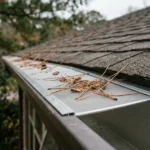
- Visible debris. Leaves, pine straw, or plants above the lip mean the trough is full.
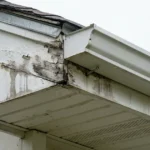
- Drip marks or peeling paint on the fascia. Water is running behind the gutter, which is how fascia damage often starts.
Ready.gov’s hurricane checklist includes de-cluttering drains and gutters. That does not mean climbing up with weather on the way. If you can see debris from the yard, write it down and call about it.
A professional gutter inspection covers what you cannot see: fasteners, seams, and outlets. Next, the patio cover.
Minutes 10 to 15: The Patio Cover
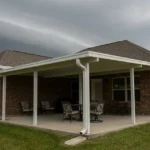
The patio cover gets five minutes because it has the most connections, and each one is a place where wind and water get a grip. Work in this order:
- Posts. Check that each is plumb, with no rot, rust, or gap at the bracket.
- Footings. Look for washed-out soil or a post sitting lower than its neighbors.
- The attachment to the house. Stains, gaps, or cracked sealant on the wall below it point to water getting in.
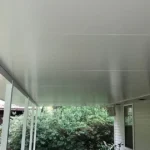
- Panels and trim. Look for gaps, lifted edges, or loose trim.
- What is sitting on top. Branches or standing water add load. A cover built to shed water should not hold it.
Check the top from a window or a spot in the yard. Do not climb onto the cover or lean a ladder against it.
If one side has started to sag, act sooner rather than later. Our page on patio cover repair in Livingston answers that exact question.
Found a leaning post, a sag, or stains where the cover meets the house? Tell us what you saw, and we will give you a straight answer on what it needs.
The last five minutes go to everything else in the yard, and to the record you will want later.
Minutes 15 to 20: Projectiles and Photos
This block is the easiest one to skip. It costs nothing, and it pays off either way.
Secure what can fly. Furniture, cushions, grills, planters, trash cans, and toys go inside, into the garage, or get tied down. Ready.gov lists bringing in outside furniture for a reason.
Take three photos before the weather arrives, with your phone’s date settings on:
- Each side of the house, showing the full gutter run and roof edge.
- The patio cover from one corner, with posts, panels, and the house attachment in frame.
- The ground, showing downspout outlets and the base of each post.
The National Association of Insurance Commissioners’ 2019 guide to preparing for extreme weather suggests photographing or videotaping every room of your home. The outside deserves the same habit, because a before photo shows exactly what changed. What a policy covers is a question for your agent. Now sort what you found.
Fix Now, Fix After, or Call Someone
Not every finding is urgent. Put each one in a bucket:
| What you found | When | Who handles it |
|---|---|---|
| Downspout extension off or splash block moved | Fix now | You, from the ground |
| Loose furniture, grills, or planters near the cover | Fix now | You |
| Debris visible in the gutter | Fix after, or call if the storm is days out | A pro if it needs a ladder |
| Gutter pulled away from the fascia | Call someone | Gutter repair |
| Drip marks or peeling paint on the fascia | Fix after | An inspection to find the source |
| Patio cover post leaning or loose at its base | Call someone | Patio cover repair |
| Stains on the wall below the cover attachment | Fix after | An inspection |
| Washout or standing water at the foundation | Fix after | Downspout and drainage work |
Only the top two rows need your hands today, and neither one needs a ladder.
The rule behind the table is simple: if you cannot see it from the ground, that is what an inspection is for. A patio cover inspection checks the structure and leak points you cannot safely reach.
Common Questions About Storm Prep for Gutters and Patio Covers in Louisiana
These are the questions homeowners ask when the forecast turns, and they have an afternoon to get ready. Each answer assumes you are staying on the ground.
What should I check on my gutters before a storm?
From the ground, check where each downspout empties, then look up for gaps between the gutter and the fascia, sagging sections, visible debris, and drip stains on the fascia. Reattach any loose downspout extension. Anything that takes a ladder to reach or fix should go to a professional inspection instead.
Can a patio cover survive high wind?
A well-built, well-maintained cover has the best chance. The weak points are usually the connections: posts at their footings and the attachment to the house. Before a storm, check that posts are plumb and bases are solid, clear anything sitting on the panels, and move loose furniture out from underneath the cover.
Should I clear my gutters before heavy rain?
Clear gutters carry water away from the house instead of spilling it at the fascia and foundation. If you can see debris from the ground, it is worth dealing with. With a storm close, do not climb a ladder in wind or rain. Note what you saw and schedule a cleaning or inspection.
What should I photograph before a storm?
Take three sets of photos: each side of the house showing the full gutter line and roof edge, the patio cover from a corner with posts and the house attachment in frame, and the ground around downspouts and post bases. Keep your phone’s date settings on so every photo is time-stamped.
My patio cover is sagging after a storm. Is that urgent?
Treat it as urgent. A sag usually means a post has shifted, a footing has settled, or a connection has worked loose. Keep people and furniture out from underneath it, take photos from a safe distance, and have it looked at before the next round of weather rather than waiting.
Book the Inspection Before the Next Line Comes Through
A 20-minute walk catches most of what you can see. The rest sits behind the fascia and inside the connections, and that is where an inspection earns its keep.
As a firefighter-owned company with over 12 years of experience, we treat gutters and patio covers as one system, because storm water does not care where one trade stops. We work throughout Baton Rouge, Denham Springs, Walker, and Livingston Parish.
Get your gutters and patio cover checked before the weather does it for you. Clear findings, no pressure, and a plain list of what can wait.
Prefer to talk it through first? Call (225) 304-2210 and ask for a pre-storm inspection.