
How to Tell If Your Gutters Need Repair or Replacement From the Ground
Start with the material, then look for where the failures are. Galvanized steel gutters are rated around 20 years on InterNACHI’s life expectancy chart, aluminum 20 to 40 or more, vinyl 25 or more and copper 50 or more. If the rust, leaks or sags sit in one spot, repair it. If they show up on every side of the house, the system is likely done.
TLDR:
- The material sets the age range, and you can usually identify it from the ground
- Neutral charts rate galvanized steel around 20 years and copper at 50 or more
- InterNACHI’s coastal chart runs shorter for every gutter material
- Corrosion often starts at seams, so count the joints on each run
- Rust, sags, seam drips, fascia stains, siding streaks and splash erosion are the visible signs
- One failure in one place is a repair; the same failure on every side is a replacement
Most homeowners around Denham Springs, Baton Rouge and Livingston Parish first think about their gutters when one overflows in a storm. That is a bad moment to decide anything. A few minutes of looking on a dry afternoon tells you far more.
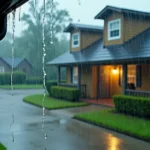
Our gutters work hard here. Baton Rouge averages 61.94 inches of rain a year under the National Weather Service’s 1991 to 2020 climate normals, and no month averages under 3.9 inches. A system that handles that for decades earns its keep. One that is near the end of its life shows it, if you know where to look.
Not sure if your gutters need a fix or a full replacement? We will look at the whole system and tell you plainly which one it needs.
Start With the Material: What Your Gutters Are Made Of
The material is the first clue to age, because each one wears out on its own schedule. You can usually name it from the yard in a minute or two, without a ladder.
InterNACHI’s roof inspection guide to roof drainage systems notes that painted steel and aluminum gutters can be hard to tell apart by eye, but tapping them with a finger gives it away. It also describes vinyl gutters as fragile, and says copper gutters generally last a long time compared to steel and vinyl.
The downspout is the easier place to test, since you can reach it from the ground. InterNACHI’s guide to inspecting gutters and downspouts says most downspouts are made of the same material as the gutters. Its article on rust inspection adds the handy part: iron and steel, including galvanized steel, are magnetic, while aluminum and copper are not.
Here is what each material tends to look like from the yard:
- Galvanized steel: a fridge magnet sticks to the downspout. Often painted, and the paint flakes where rust is starting underneath.
- Aluminum: no magnet pull, a lighter sound when tapped, and a factory finish that chalks or fades rather than rusts.
- Vinyl: plastic look and feel, snap-together joints, and sections that crack or pop apart.
- Copper: no magnet pull and an unmistakable color, bright when new and brown to green with age.
Once you know the material, the next question is how long that material usually lasts.
How Long Do Gutters Last? What the Neutral Charts Say
The most widely used neutral reference is InterNACHI’s Standard Estimated Life Expectancy Chart for Homes. As it reads in 2026, it lists galvanized steel gutters and downspouts at 20 years, aluminum at 20 to 40 or more, vinyl at 25 or more and copper gutters at 50 or more.
InterNACHI also publishes a Florida Estimated Life Expectancy Chart, which it says may also apply to nearby coastal states with similar climate and weather. It explains that items exposed to wind, sun and heat are more prone to early failure there, and every gutter material gets a shorter number.
| Material | Standard chart | Coastal chart | Ground clue |
|---|---|---|---|
| Galvanized steel | 20 years | 15 years | Magnet sticks, rust under paint |
| Aluminum | 20 to 40+ years | 15 to 35+ years | No magnet pull, finish chalks or fades |
| Vinyl | 25+ years | 20+ years | Plastic, snap-together joints |
| Copper | 50+ years | 40+ years | Copper color, brown or green patina |
South Louisiana is hot, humid and wet, so the coastal column is a fair reality check for homes here. Treat both columns as a rough guide, not a deadline.
Copper outlasts everything else by a wide margin, and galvanized steel has the shortest life on both charts. That makes galvanized the material most likely to be at the end of its run on an older Louisiana home.
Why the Age Numbers Are Only Half the Answer
Age tells you what to expect. Condition tells you what is actually happening, and the two do not always line up.
InterNACHI is careful about this. Its standard chart says the estimates assume regular recommended maintenance and normal wear, not extreme weather, neglect or abuse, and should be used as guidelines only. A well-kept aluminum system can run past its number. A poorly hung one can fail in a fraction of it.
So use the chart to set your expectations, then let the signs on the house make the call. That starts with the seams.
Sectional or Seamless: Count the Seams
The number of joints in a gutter run matters, because joints are where trouble usually begins. InterNACHI’s roof drainage guide notes that corrosion often starts at seams, and that metal gutters corrode faster when debris holds moisture against them.
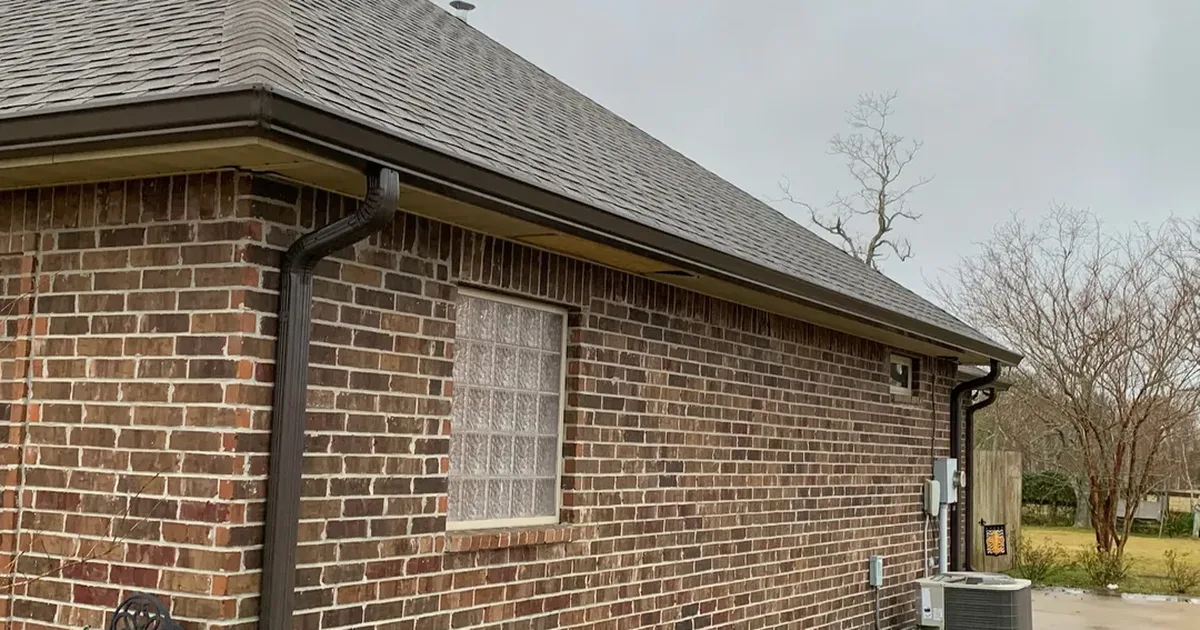
From the ground, look along each run for thin vertical lines or overlaps on the gutter face. A sectional system shows joints at regular intervals along the straight runs, where one length overlaps the next. A seamless system is formed in long continuous lengths, so you only see joints at the corners, end caps and downspout outlets.
Every one of those sectional joints is sealed with caulk or sealant, and every one is a place a leak can start. Our seamless gutter installation takes most of those joints out of the system, which is why many homeowners make the switch when the old sections are worn out. We cover the trade-offs in more depth in our guide to why seamless gutters matter in Baton Rouge.
Seven Age Signs You Can See Without a Ladder
Walk the house slowly, once around, and look up at the roof edge and down at the ground below it. These are the signs worth noting, and where each one tends to show up.
1. Rust or Peeling Paint
Orange or brown streaks, bubbling paint and flaking spots are the classic galvanized steel warning. Paint can hide early rust, so look closely at the bottom edge and around the joints. Rust that has eaten through shows as daylight or as a drip that falls in the middle of a section.
2. Sags and Pulled Hangers
Stand back and sight along the gutter from one corner. It should run as a steady line just below the roof edge. InterNACHI’s roof drainage guide says you can check slope from the ground by watching the gap between the gutter and the roof or fascia, so a gap that grows and shrinks is worth noting.
Older systems were often hung with long spikes driven through the face of the gutter. Spike heads that have backed out, or a gutter that dips between two of them, usually mean the fasteners have loosened in the wood.
3. Drips at the Seams
After a rain, watch the joints. A seam that keeps dripping for a while after the gutter has drained is a seam that has failed. One bad seam is a small repair. Drips at most of the seams on a sectional system tell a different story.
4. Fascia Stains or Rot
Dark streaks on the fascia board, peeling trim paint or a board that looks swollen all mean water is getting behind the gutter. That is often where the real cost hides, and it changes the order of the work. Our guide to fascia rot from gutters covers how to tell a trim repair from a structural one.
5. Overflow Lines on the Siding
Vertical streaks or dirt lines on the siding below the gutter mark the spots where water has been spilling over. One streak below a low spot tends to mean a sag or a clog. Streaks along the whole length point to a gutter that has lost its slope or is too small for the roof.
6. Detached or Damaged Downspouts
Look for a gap between the downspout and the gutter outlet, loose straps on the wall and crushed sections near driveways. InterNACHI’s gutter inspection guide lists all of these, including impact damage from vehicle doors, as things to check on every downspout.
7. Splash Erosion at the Outlet
Bare soil, washed-out mulch or a small trench where a downspout discharges means water is landing in one spot and staying near the house. The same guide says downspouts should send water 4 to 6 feet away from the foundation. If yours stop short, our guide to standing water at the foundation in Walker covers where that water should go.
With your notes in hand, the next step is reading the pattern, not just the list.
Found a few of these on your walk? Send us what you saw. We will check the full system and tell you if it is a repair or a replacement, with no pressure either way.
Repair or Replace: One Spot or the Whole System?
The single most useful question is where the failures are. A problem in one place usually has a local cause and a local fix. The same failure on every side of the house means the system itself is wearing out.
These are general patterns from the signs above, not hard rules. Your house may have its own story, but this is the logic we start from:
| What you see | Where you see it | Usually points to |
|---|---|---|
| One leaking seam or end cap | One spot | Repair: reseal the joint |
| A sag between two fasteners | One run | Repair: rehang that section |
| A downspout pulled off its outlet | One corner | Repair: reattach and strap |
| Rust holes in several sections | Several runs | Replace |
| Drips at most seams | Every side | Replace, often with seamless |
| Sags that return after rehanging, with soft fascia | Several runs | Fix the fascia, then replace |
| A system at or past its chart age, failing on several sides | Whole house | Replace |
Read the table from the top down. The higher your findings sit, the more a repair makes sense. The lower they sit, the more money a repair is likely to waste.
When a Repair Is the Right Call
A repair makes sense when the system is mostly sound and the trouble has a clear, local cause. A seam that let go, a section knocked loose by a falling limb or a downspout bumped by a car are all good examples. Our gutter repair service handles exactly these kinds of single-point failures.
Age matters here too. Repairing a five-year-old aluminum system is an easy call. Repairing one rusted section on a galvanized system that is already past 20 years often buys very little time before the next section goes.
When Replacement Makes More Sense
Replacement makes sense when failures are spread out, when rust has gone through the metal in more than one place, or when you keep repairing the same spots every season. At that point you are paying to patch a system that is wearing out everywhere at once.
It also makes sense when the gutters were never right for the house. Gutters that overflow on every side even when clean may be too small for the roof above them. A full gutter replacement is the chance to fix the size, the slope and the downspout layout at the same time.
What to Check Before You Call Anyone
A little homework makes any conversation with a contractor faster and more honest. You do not need tools beyond a phone and a fridge magnet.
- Name the material. Try the magnet on a downspout and note the color and finish.
- Count the seams. Note if joints run along the straight sections or only at the corners.
- Photograph every side. Take one wide shot of each wall and close-ups of anything rusted, sagging or stained.
- Walk it after a rain. Note where water drips, where it streaks the siding and where it pools.
- Note the age if you know it. A closing disclosure or past invoice can settle the question.
If a storm is on the way, our 20-minute pre-storm gutter check covers the urgent items first. For a full look by someone who does this every week, our gutter inspection goes over every run, joint and downspout.
Common Questions About Repairing or Replacing Gutters in Louisiana
These are the questions Denham Springs, Baton Rouge and Livingston Parish homeowners ask when they are deciding between repairing and replacing their gutters. The answers draw on InterNACHI’s inspection guidance and life expectancy charts.
How long do gutters last in Louisiana?
It depends on the material. InterNACHI’s standard chart lists galvanized steel at 20 years, aluminum at 20 to 40 or more, vinyl at 25 or more and copper at 50 or more. Its coastal chart, meant for hot, humid areas, gives shorter numbers for every material, so expect the lower end here.
How can I tell what my gutters are made of?
Hold a fridge magnet against a downspout, which is usually the same material as the gutters. If it sticks, you have steel, often galvanized. Aluminum and copper are not magnetic. Copper has a distinct color, and vinyl looks and feels like plastic with snap-together joints.
Should I repair or replace my gutters?
Look at where the problems are. A single leaking seam, one sagging run or a loose downspout calls for a repair. Rust holes, seam leaks or sags on several sides of the house, especially on an older galvanized system, usually mean replacement will last longer than another round of patches.
Can I tell how old my gutters are from the ground?
You can get close. The material sets the likely age range, and joints along the straight runs mean a sectional system rather than seamless. Rust, flaking paint, backed-out spike heads, siding streaks and fascia stains all point to a system that has been up for many years.
Are seamless gutters worth it when replacing old ones?
For many homes, yes. InterNACHI notes that gutter corrosion often starts at seams, and a seamless system only has joints at corners, ends and outlets. With fewer joints, there are fewer places for leaks to start, which matters with the amount of rain South Louisiana gets.
Is it worth fixing gutters if the fascia is rotting?
Fix the fascia first. Gutters hang from that board, so new fasteners in soft wood will pull loose again. Once the wood is repaired, decide on the gutters based on their age and condition. Rot behind the gutter is a sign water has been getting past it for a long time.
Get a Straight Answer on Repair or Replace
The material tells you how long your gutters should last. The pattern of failures tells you if they are done. As a firefighter-owned company with over 12 years of experience, we give gutter replacement in Denham Springs and gutter repairs in Baton Rouge the same honest look, and we will tell you when a repair is enough. We serve homes across Denham Springs and Livingston Parish, and you can see recent work in our project gallery.
Ready to settle the repair or replace question? We will walk the whole system with you and give you a clear quote, with no surprises.