
What Does a Patio Cover Cost in Denham Springs?
In Louisiana, non-insulated aluminum patio covers generally plan out around $15 to $35 per square foot installed, and insulated foam-core systems around $26 to $60. A 16 by 20 foot cover lands roughly between $4,800 and $19,200 depending on panel type, span, and site conditions. We quote after we look, because the slab and the attachment decide too much of it.
TLDR:
- Non-insulated aluminum: roughly $15 to $35 per square foot installed in the Louisiana market (Southern Home Improvement, 2026)
- Insulated foam-core: roughly $26 to $60 per square foot, with national figures for insulated covers at $30 to $60 (HomeGuide, 2026)
- Five things move your number: size and span, roof style, insulated or not, attachment method, and slab condition
- Drainage is the line item most quotes leave out. A cover is a roof, and that roof has to put water somewhere
- Electrical adds $500 to $2,000 or more; permits, concrete, and demolition can add $3,000 to $12,000
- Livingston Parish permits and setbacks can change the design before anything gets built
Denham Springs backyards make this harder than a price chart allows. Slabs settle, older patios were poured with no thought to a future roof, and plenty of homes here have already been through water once.
Two houses on the same street can need two different structures, and the quote follows the structure.
Not sure what your backyard actually needs? We quote after we look at the slab and the roofline, then price the structure and the water together.
Why Nobody Can Quote a Patio Cover Over the Phone
The honest answer is that the biggest cost variables are things you cannot describe accurately over a phone call. Somebody has to look.
Square footage is the starting point, not the answer. A 12 by 20 cover and a 16 by 20 cover are not separated by a simple multiplier, because the wider span may need a heavier beam, different post spacing, or a footing the smaller one does not.
Attachment matters just as much. A cover that ties into your existing roofline is a different job from a freestanding structure with its own posts and footings. The tie-in has to be flashed correctly, or you have built a leak into the side of your house.
That is the part a phone quote cannot see, and it is usually where the money is.
The Five Things That Actually Move Your Number
Every quote we write comes down to the same short list. Once you know it, you can read any bid you receive and tell what you are actually being charged for.
Size and span. Bigger is not just more material. Past a certain width the framing has to get heavier, and that steps the price up rather than sliding it up.
Roof style. A flat or low-slope pan is the most economical. A gable or hip roof costs more because it is more framing, more cuts, and more labor, and it usually looks like it belongs on the house.
Insulated or non-insulated panels. Insulated foam-core panels run roughly one and a half to one and two thirds times the material cost per square foot. In our climate they also cut the radiant heat coming off the underside and quiet the rain down considerably. We wrote a full comparison in insulated vs non-insulated patio covers.
Attachment method. Tied into the house, freestanding, or a hybrid. Each carries different framing, flashing, and footing work.
Slab condition. If your existing patio is cracked, settling, or pitched toward the house, that gets addressed before anything is built on it. Sometimes that means a new pour.
Those five explain most of the spread between a low bid and a high one on the same backyard.
Every quote we write comes down to those five factors. Have us walk your patio and tell you which ones apply to your build.
What That Looks Like in Numbers
Square footage times a rate is a planning starting point, not a quote.
| Cover size | Non-insulated ($15 to $35/sq ft) | Insulated ($26 to $60/sq ft) |
|---|---|---|
| 12 x 16 (192 sq ft) | $2,880 to $6,720 | $4,992 to $11,520 |
| 16 x 20 (320 sq ft) | $4,800 to $11,200 | $8,320 to $19,200 |
| 20 x 24 (480 sq ft) | $7,200 to $16,800 | $12,480 to $28,800 |
These ranges cover the structure and installation. Electrical, concrete, and permits are separate line items, which is why an itemized written quote is worth more than a per square foot rate over the phone.
The Line Item Most Quotes Leave Out
Here is the one that surprises people. A patio cover is a roof, and a roof collects water.
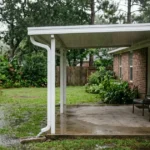
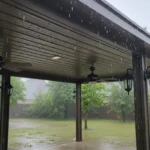
A 12 by 20 cover sheds roughly 150 gallons for every inch of rain that falls on it. Baton Rouge averages 61.9 inches of precipitation a year on the 1991 to 2020 national climate normals. That water has to go somewhere, and if nobody planned for it, it goes straight off the edge, into the ground at your slab, and eventually toward your foundation.
Most patio cover quotes price the structure and stop there. No gutter, no downspout, no thought about where the discharge lands. The homeowner finds out during the first hard storm.
We do gutters, so we price the drainage as part of the job rather than as a surprise. If you want the full explanation, we covered it in patio cover gutters and where the water actually goes.
When you compare bids, check for that line. Its absence is not a discount.
Reading a Patio Cover Bid Without Getting Burned
A cheap bid and an expensive bid on the same patio usually differ in scope, not in greed. The trick is finding out where.
Before you compare, confirm each quote states:
- Panel type and gauge, insulated or not, and the manufacturer
- Exact dimensions and where any posts land
- Beam and post sizes, and the attachment method with its flashing detail
- What happens to the water, including gutter and downspout discharge
- Whether the slab was evaluated or simply assumed
- What site work is included, specifically concrete and demolition
- Whether electrical is included, and who pulls the permit
You can see how those choices play out across finished builds in our project gallery. A contractor who has actually looked at your backyard can answer all of those without hedging. One working from a phone description cannot, and the difference shows up as a change order later.
A quote that is $3,000 lower and silent on three of those items is not lower. It is incomplete.
Get a Real Number for Your Backyard
You can also start with patio cover installation in Denham Springs if you want the service details first.
Get a real number for your backyard. We quote after we look, and the quote covers the structure and the water. No placeholder pricing, and no line items that appear later.
Common Questions About Patio Cover Pricing Around Denham Springs
These come up on almost every estimate we write in Livingston Parish.
Can You Give Me a Ballpark Before You Come Out?
We can talk through what a project like yours usually involves and what would push it up or down. A firm number waits until we see the space, because the slab condition and the attachment method decide too much of it. Anyone who gives you a fixed price over the phone without seeing your patio is guessing, and that guess tends to get corrected by change order later.
Is an Insulated Patio Cover Worth the Extra Money Here?
For most Denham Springs homeowners who actually use the patio in summer, yes. Insulated foam-core panels cut the radiant heat coming off the underside and quiet the rain down considerably. The premium runs roughly one and a half to one and two thirds times the per square foot material cost. If the patio faces west or south, it is usually the better spend.
Do I Need a Permit for a Patio Cover in Livingston Parish?
Usually, and setbacks can affect where the structure is allowed to sit, which occasionally changes the design before anything gets built. We handle permitting as part of the project rather than leaving it to you. Ask any contractor to state in writing who pulls the permit and whether the fee is included in their number.
Why Do I Need a Gutter on a Patio Cover?
Because the cover is a roof. A 12 by 20 cover sheds about 150 gallons of water per inch of rain, and Baton Rouge averages nearly 62 inches of rain a year. Without a gutter and a downspout routed away from the house, that water lands at your slab and works toward your foundation. On the flat lots common around Denham Springs, that matters more than it would elsewhere.
Can You Build on My Existing Patio?
Often yes. It depends on the thickness, condition, and pitch of the slab. If it is cracked, settling, or pitched back toward the house, that gets addressed first. Evaluating the slab is one of the first things we do, and it is one of the most common reasons two quotes on the same backyard come back at different numbers.