
What Separates an Insulated Patio Cover From a Standard Aluminum Panel
An insulated patio cover is a foam core bonded between two aluminum skins, so it stops heat at the roof. A non-insulated cover is a single aluminum pan that blocks sunlight and nothing else. In Baton Rouge, where afternoon highs hold near 90 degrees for months, insulated is the right call for any patio you plan to sit on in summer.
TLDR:
- A non-insulated cover blocks sun. The panel itself still heats up and radiates that heat back down onto your patio
- Insulated panels use a foam core rated around R-4 per inch, so a 3-inch panel lands in the low double digits
- Baton Rouge stays above 85 degrees for roughly 4.3 months a year, so this is a duration problem, not a one-week problem
- Insulated panels span farther between supports, which means fewer posts standing in the middle of your patio
- The foam core cushions rain noise, and that matters more here than in most of the country
- Non-insulated is the correct choice for carports, walkways, and anything you pass under rather than sit under
- Panel color changes surface temperature on either type, so the color decision is not only cosmetic
If you live in East Baton Rouge or Livingston Parish, you already know the pattern. The patio gets built, everybody loves it in October, and then July arrives and nobody goes out there between noon and six. The cover is doing exactly what it was designed to do. It just was not designed to do the thing you actually needed.
Not sure which panel your patio calls for? We will walk the space with you, tell you straight which one fits, and put it in writing at no charge.
The Two Panels Are Built Differently, Not Just Priced Differently
People tend to hear “insulated” as an upgrade tier, like a trim package. It is a different product with a different cross-section.
A non-insulated cover is formed aluminum. One layer, usually with a W-pan or corrugated profile stamped into it for stiffness. Sun hits the top, the metal absorbs it, and the underside gets hot. That heat then radiates down into the space you are sitting in.
An insulated panel is a sandwich. Two aluminum skins with a bonded foam core between them, most commonly expanded polystyrene, sold in 3-inch, 4-inch and 6-inch thicknesses. The skins handle weather and structure. The core handles heat.
That structural difference is where every other difference comes from. Once you understand the cross-section, the rest of the comparison stops being a matter of opinion.
Blocking the Sun and Blocking the Heat Are Two Different Jobs
This is the part that surprises homeowners after the fact, and it is the single most common complaint we hear about covers somebody else installed.
Shade solves direct sunlight. It does not solve radiant heat. A bare aluminum panel sitting in full Louisiana sun absorbs that energy all afternoon, and the underside becomes a warm surface hanging directly over your head. You are out of the sun and still uncomfortable.
Color matters here on both panel types. Research from the Lawrence Berkeley National Laboratory Heat Island Group found that on a typical summer afternoon, a clean white roof reflecting 80 percent of sunlight stays roughly 55 degrees cooler than a gray roof reflecting only 20 percent. The same physics applies to the panel over your patio.
So a light-colored non-insulated cover genuinely runs cooler than a dark one. It still cannot match a panel that has insulation built into it.
What the Foam Core Is Actually Rated For
Numbers help here, because “insulated” by itself is a marketing word until somebody attaches a value to it.
The core in these panels is expanded polystyrene. Rmax, an insulation manufacturer, puts EPS at roughly R-4 per inch, varying somewhat with density and the temperature it is measured at. A 3-inch panel therefore lands in the low double digits, and the thicker 4-inch and 6-inch panels climb from there.
A single sheet of aluminum has effectively no meaningful R-value at all. Metal is a conductor. That is the whole comparison in one line.
For most residential patios in our area, the 3-inch panel is the right balance. Going thicker buys performance you will not notice on a patio and adds cost and weight you will.
Louisiana Heat Is a Duration Problem
One brutal afternoon does not justify a different roof panel. Five months of them might.
Baton Rouge holds an average daily high of 90 degrees in July, the hottest month of the year, according to Weather Spark’s climate summary for the city. The same summary puts the hot season at 4.3 months, running from May 17 to September 26, with average highs above 85 degrees the entire time.
That is the number that should drive this decision. You are not buying comfort for a handful of days. You are buying it for roughly a third of the year, every year, for as long as you own the house.
Add the humidity we live with and the calculation gets easier. Air that will not evaporate sweat off your skin makes radiant heat from above feel worse, not better.
We install both panel types across Baton Rouge, Denham Springs, Walker and Livingston Parish. If you want an honest read on which one your patio needs, we will give you one.
Rain Noise Is the Difference Nobody Mentions Until After
Ask anybody who has sat under a bare aluminum cover during a Louisiana squall line. They will bring this up before they bring up heat.
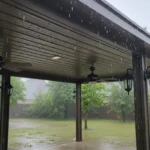
Rain on a single sheet of metal is loud. The panel is a drum head, and every drop hits it. Conversation under a non-insulated cover during a real downpour is genuinely difficult.
The foam core changes that because it damps the impact rather than amplifying it. Insulated panels are noticeably quieter in heavy rain. They are not silent, and anyone who tells you otherwise is overselling.
Given how often it rains here, this ends up mattering to people far more than they expected when they were comparing quotes.
Span and Post Placement Change How the Patio Looks
This one is structural, and it affects the finished look more than most homeowners realize going in.
Insulated panels are stiffer than a single formed sheet, so they carry farther between supports. Published load tables for insulated roof panels show a 3-inch panel spanning up to 16 feet at a 10 psf load, dropping to about 8 feet 7 inches at 50 psf, with 4-inch and 6-inch panels going farther still.
The practical result: fewer posts. A non-insulated cover over a wide patio may need a support column planted in the middle of your usable space. An insulated panel can often clear the same distance without one.
If you have a specific furniture layout or an outdoor kitchen in mind, bring that up during the walkthrough. Post placement is much cheaper to solve on paper than after the concrete is set.
When Non-Insulated Is the Correct Answer
We install plenty of non-insulated covers and we are not talking anybody out of one. It is the right product for real situations.
Choose non-insulated when the structure covers space you move through rather than sit in. Carports, walkways, breezeways, equipment storage and trash can enclosures all fall here. Nobody is lingering under them in July.
It is also the sensible pick when the cover sits in existing shade. A patio on the north side of the house, or one already shaded by mature oaks most of the afternoon, does not have the same heat load to solve.
And it is the honest answer when budget is the constraint and the alternative is postponing the project entirely. A non-insulated cover that gets built this year beats an insulated one that stays a plan. Our non-insulated patio cover installation uses the same posts, footings and finish work as the insulated build.
A Straight Comparison
Here is the same information in one place, without the sales framing.
| Factor | Non-insulated | Insulated |
|---|---|---|
| Panel build | Single formed aluminum sheet | Foam core bonded between two aluminum skins |
| Blocks direct sun | Yes | Yes |
| Blocks radiant heat | No | Yes |
| Thermal rating | Effectively none | Around R-4 per inch of core |
| Rain noise | Loud | Noticeably damped |
| Span between posts | Shorter | Longer, so fewer columns |
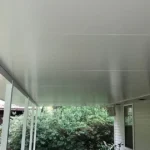
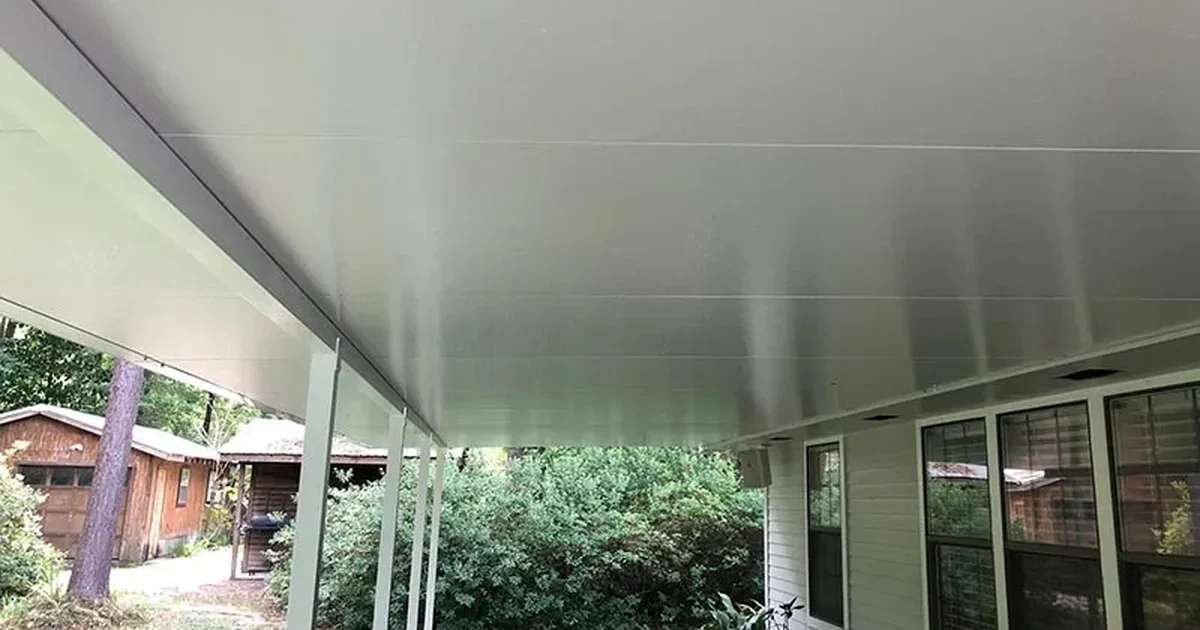
| Underside finish | Exposed pan profile | Flat finished ceiling |
| Best for | Carports, walkways, shaded patios | Patios used in summer, outdoor kitchens |
| Relative cost | Lower | Higher |
The pattern in that table is consistent. Pay attention to the “best for” row more than the cost row, because the wrong panel in the right budget still leaves you with a patio you avoid five months a year.
What Baton Rouge Homeowners Ask About Insulated Patio Covers
These come up on nearly every estimate we write, so here are the plain answers before you ask.
Does an insulated patio cover actually make the patio cooler?
It makes the space under it meaningfully more comfortable, because the panel is no longer radiating absorbed heat down at you. It does not air condition the outdoors. On a 95 degree afternoon it will still be hot outside, just without the added heat load coming off the ceiling.
Can I add insulation to a non-insulated cover I already have?
Not as a retrofit to the panel itself. The foam core is factory-bonded during manufacturing, so converting means replacing the roof panels. The existing posts, beams and footings can often be reused, which keeps the cost of that change well below a full rebuild.
Is an insulated patio cover strong enough to walk on?
The 3-inch and thicker panels are generally rated as walkable for maintenance access, which is one reason people choose them for covers near a roofline that needs periodic cleaning. Confirm the specific rating for your panel and span before anyone climbs up there.
Which one holds up better in a Louisiana storm?
Both are aluminum systems engineered to a wind load, and installation quality matters far more than panel type. Attachment to the house, post embedment and footing size decide how a cover performs in high wind. Ask any contractor what wind load they are building to.
Does the insulated panel help with gutters and drainage?
The panel type does not change the drainage math. Any solid cover is a roof, and it relocates every drop that lands on it toward one edge. We covered that in detail in our guide to where patio cover water actually goes.
How much more does an insulated cover cost?
It is a higher material cost per square foot, and the gap widens on larger covers. The labor, posts, footings and permitting are comparable. We price both options on the same estimate so you can see the actual difference for your patio rather than a general percentage.
Which do most people in Denham Springs choose?
For patios attached to the back of the house that get afternoon sun, insulated wins most of the time once people understand the difference. For carports and side-yard structures, non-insulated is still the common pick. Our Denham Springs patio cover installation page covers what the process looks like locally.
Get a Straight Recommendation for Your Patio
The right panel depends on which direction your patio faces, how much shade it already has, how wide the span is, and what you plan to do out there in July. That is a 20-minute conversation standing in the backyard, not a guess from a price list.
We are a firefighter-owned company with over 12 years of experience building covers across East Baton Rouge and Livingston Parish. We will tell you when the cheaper panel is the correct one, because sending you the wrong direction costs us more than the job is worth.
Get both options priced on one estimate. No pressure, no surprise line items, and a clear recommendation you can act on when you are ready.