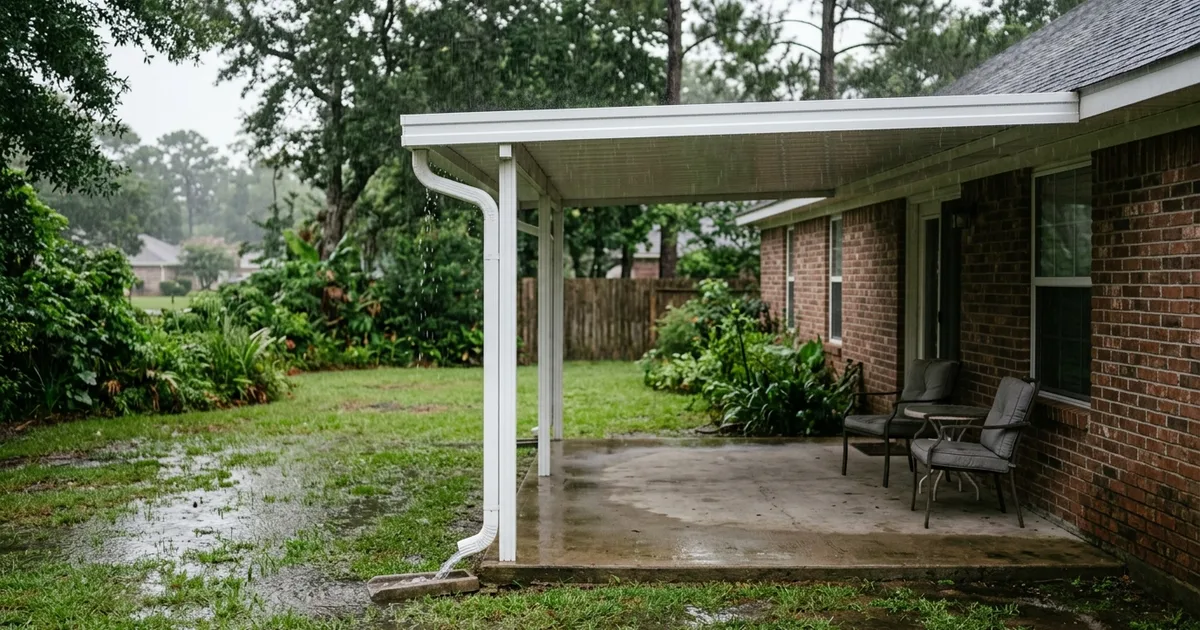

How Patio Cover Drainage Works, and When Your Cover Needs Its Own Gutter
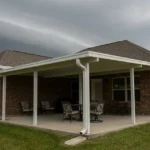
A patio cover is a roof. It collects every drop that falls on it and dumps that water along one edge, usually a few feet from your foundation. A gutter on the cover catches that runoff and moves it somewhere harmless. Without one, the water lands in the same line every storm, and that line is where the damage starts.
TLDR:
- A 12×20 patio cover sheds about 150 gallons per inch of rain, so a 5-inch storm sends roughly 750 gallons off one structure
- Baton Rouge averages about 62 inches of rain a year, so one 12×20 cover relocates roughly 9,000 gallons annually
- The runoff lands in a concentrated drip line, not a spread-out sheet, which is what makes it damaging
- Covers attached to the house need a plan for both roofs, not just the new one
- Slope, gutter size, and downspout placement all have to be decided before the posts go in
- Retrofitting a gutter to an existing cover is normal work and usually straightforward
- The failure you notice first is rarely the gutter. It is the slab, the fascia, or the soil at the footing
If you live in Livingston Parish or East Baton Rouge, you already know what a real Louisiana downpour does. Water comes sideways, comes hard, and comes for hours. A patio cover built without a drainage plan does not fail during a normal shower. It fails during the storm you actually needed it for, and by then the water has already been running the same path for years.
Not sure where your patio cover is sending its water? We will come look at it and tell you straight, at no charge and with nothing to sign.
A Patio Cover Moves More Water Than People Expect
The number surprises most homeowners, so it is worth doing the arithmetic before anything else. A roof does not absorb rain. It relocates all of it.
One inch of rain on one square foot produces about 0.62 gallons of water. A 12-foot by 20-foot patio cover is 240 square feet. That works out to roughly 150 gallons per inch of rain, and a heavy Louisiana storm dropping five inches sends about 750 gallons off that one structure in a matter of hours.
Baton Rouge averages about 62 inches of rain a year according to Current Results’ summary of NOAA climate normals. Across a full year, that modest 12×20 cover relocates somewhere near 9,000 gallons. All of it leaves along one edge.
That volume is the whole reason this matters. The question was never if your cover needs a drainage plan. It is where the water has been going instead.
The Drip Line Is the Problem, Not the Rain
Rain falling on open ground spreads out. Rain falling on a roof does not. Understanding that difference explains most patio cover damage we get called out to look at.
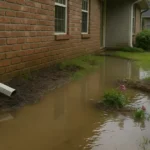
Without a gutter, everything the cover collects exits along the outer edge in a narrow band. That band hits the same few inches of ground, or the same edge of your slab, every single time it rains. Water that would have been harmless spread across 240 square feet becomes concentrated into a strip a few inches wide.
Here is what that concentration does over time:
| Where the water lands | What happens |
|---|---|
| Bare soil at the slab edge | Erodes a trench, then undermines the slab edge |
| Against the foundation | Saturates soil at the footing, contributing to movement |
| On the slab itself | Splashback stains the cover posts and the house wall |
| Onto a walkway | Standing water, algae, and a slip hazard |
| Into a flower bed | Washes out mulch and drowns plantings |
The pattern behind all five rows is the same, and it is easier to see than to describe.
None of these show up in the first season. They show up in year three or four, and by then the fix is no longer a gutter.
When a Patio Cover Needs Its Own Gutter
Not every cover needs one. Knowing the difference saves money on the covers that do not, and saves a slab on the covers that do.
A patio cover needs its own gutter when any of these are true:
- The cover drains toward the house. Any slope that sends water back at the foundation needs interception, always.
- The drip line lands within about five feet of the foundation. Close enough to reach the footing soil.
- The ground below is soil, mulch, or anything erodible. Concrete tolerates a drip line. Dirt does not.
- The patio is used as living space. A curtain of water off the edge makes a covered patio unusable in exactly the weather you built it for.
- The house roof also drains onto the cover. This one is common and it is the worst case, so it gets its own section below.
A cover that sheds onto an open lawn, well away from the house, sloping away, over grass that drains well, may genuinely be fine without one. That is a smaller share of the covers we see than you would think.
If you already have a covered patio, walk out during the next hard rain and look at the outer edge. Where the water hits is the answer. You do not need a contractor to tell you where your own drip line is.
The Case Everyone Gets Wrong: Two Roofs, One Gutter
This is the failure we are called out for most often, and it is almost always a design decision made years earlier by someone who was thinking about shade rather than water.
When a patio cover attaches below the existing roofline, the main house roof often sheds directly onto the patio cover. The cover is now handling its own rainfall plus a slice of the house’s. A gutter sized for a 240 square foot cover is suddenly draining 600 or 800 square feet of combined roof.
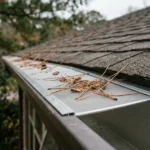
Undersized gutters do not leak. They overshoot. Water runs past the front lip in any real rain, which is why homeowners tell us the gutter “works fine until it actually storms.” It was never sized for the load it was given.
The fix depends on the geometry. Sometimes it means a larger gutter and a second downspout on the cover. Sometimes it means intercepting the house roof higher up with its own seamless gutter run so the two roofs never combine. Both are ordinary work. Guessing between them is not.
Water running past the front of your gutter every storm is a sizing problem, not a cleaning problem. We will measure the roof area actually draining into it before quoting anything.
Slope, Size, and Downspouts
Three decisions determine if a patio cover gutter works. They are easy to get right during a build and expensive to correct afterward.
Slope. A gutter has to fall toward the outlet. Too little and water sits in the trough, which invites mosquitoes and sags the hangers over time. Too much and the fall becomes visible against a level fascia, which looks wrong on a structure people sit under and stare at every evening.
Size. Gutter capacity is set by the roof area draining into it, the pitch of that roof, and local rainfall intensity. Louisiana sits at the high end of all three, so a size that is adequate in a drier state overshoots here.
Downspout placement. This is the decision that gets rushed. A downspout has to land somewhere the water can leave, and it should not dump beside a post, across the walking path, or straight back at the slab. Placement is as much about how the patio gets used as it is about hydraulics.
Get those three right and the gutter is invisible, which is the goal. Nobody built a covered patio to look at the gutter.
Retrofitting a Gutter to a Cover You Already Have
Most of the covered patios in this area were built without gutters. That is fixable, and it is far less invasive than homeowners expect.
Adding a gutter to an existing patio cover does not mean rebuilding the cover. In most cases it means attaching a gutter to the existing outer edge or fascia, setting the fall, and running a downspout to a discharge point that actually helps. The structure stays put.
The part worth spending time on is the discharge. A downspout that ends at the slab edge has moved the problem twelve inches. Sending that water to a place it can leave, away from the footing and away from where people walk, is the whole point of the exercise. That is why a downspout installation is planned around your yard rather than dropped straight down.
Where it can go depends on your soil. The LSU AgCenter notes that a dry well will not help much if the surrounding soil drains poorly, which is common on the heavier clay soils around here. On those lots the answer is usually to move the water somewhere else entirely rather than try to put it into the ground where it lands.
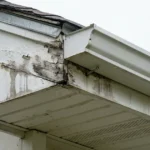
If the cover itself has water damage at the fascia or posts, that gets addressed first. Hanging a new gutter on rotted fascia is a repair with a short shelf life, and patio cover repair comes before drainage work for that reason.
Building New? Decide This Before the Posts Go In
The cheapest time to solve patio cover drainage is before anything is standing. It costs almost nothing at the design stage and it is the single most common regret we hear about covers built by someone else.
On a new patio cover installation, drainage is part of the drawing. Which way the cover falls, where the gutter runs, where the downspout lands, and how it interacts with the house roof are all decided before a post is set. If the project includes new concrete, the slab gets poured with the discharge point already accounted for.
Covers designed this way do not need a drainage retrofit in year four. That is the entire argument for doing it up front.
Questions Louisiana Homeowners Ask About Patio Cover Drainage
These come up on nearly every estimate we write for a covered patio. If yours is not here, the answer is a phone call away.
Does every patio cover need gutters?
No. A cover that sheds well away from the house, onto ground that drains, sloping away from the foundation, can work without one. Most covers in this area do not meet all three conditions, which is why gutters are the common recommendation rather than the exception.
Can gutters be added to an existing patio cover?
Yes, and it is routine work. The gutter attaches to the existing outer edge or fascia without rebuilding the structure. The planning effort goes into where the downspout discharges, not into the gutter itself.
Why does my patio cover gutter overflow in heavy rain?
Usually because it is draining more roof than it was sized for. When the house roof sheds onto the patio cover, the gutter carries both loads. Water running past the front lip during storms is the signature of an undersized gutter, not a clogged one.
Where should the downspout from a patio cover go?
Somewhere the water can leave without returning to the foundation or crossing a walkway. That varies by yard. The wrong answer is straight down at the slab edge, which relocates the problem by about a foot.
Will a gutter on my patio cover look bad?
It should not. A gutter set with the correct fall against a level fascia reads as part of the structure. Covers that look wrong usually have too much visible slope or a downspout placed without regard for the sight line.
What does patio cover water damage look like early?
Look for a trench or washed-out soil in a straight line under the cover’s outer edge, staining or splashback on the posts and the house wall, and soil pulling away at the slab edge. Those appear well before anything structural does.
Talk to Someone Who Does Both
Most contractors do patio covers or gutters. The water does not care about that division, which is why so many covered patios in this area drain badly. As a firefighter-owned company with over 12 years of experience across both trades, we plan the cover and the water together, because they are the same job.
We work throughout Baton Rouge, Denham Springs, Walker, and Livingston Parish. If you want to see the kind of work this produces, the project gallery is a reasonable place to start.
Tell us what your patio cover is doing in the rain, and we will tell you what it needs. No pressure, no surprises, and a clear next step either way.
Prefer to talk it through? Call (225) 304-2210 and ask for a drainage assessment.